4 min read • 773 words
Introduction
In the pre-dawn hours, a significant military strike unfolded against Venezuela, marking a dramatic escalation in hemispheric tensions. President Donald Trump’s subsequent address to the nation was not merely a statement of fact, but a carefully calibrated political and strategic signal. The world watched closely, parsing his words for clues about the administration’s endgame in a crisis that has festered for years.

The Dawn of a New Phase
The operation, described by U.S. officials as a ‘large-scale’ action, targeted key military and logistical infrastructure linked to the government of Nicolás Maduro. This move represents a stark departure from the previous policy toolbox of sanctions and diplomatic isolation. For the first time, the U.S. has employed direct kinetic force, fundamentally altering the stakes and the geopolitical landscape of Latin America.
Decoding the Presidential Address
In his remarks, President Trump framed the strike as a ‘necessary and proportionate’ response to specific, imminent threats against U.S. personnel and regional allies. He reiterated unwavering support for interim President Juan Guaidó, labeling Maduro’s regime as ‘illegitimate and criminal.’ The tone was one of resolved strength, devoid of overt war-mongering but clear in its assertion of a right to act. Analysts noted the speech was aimed as much at domestic audiences as international ones.
The Geopolitical Chessboard
This action cannot be viewed in a vacuum. It directly challenges not only Caracas but also its primary international backers: Russia, China, and Iran. All three nations have vested economic and strategic interests in Venezuela, from oil concessions to military partnerships. The U.S. strike is a bold test of their resolve, potentially opening a new front in a broader great-power competition, this time in America’s traditional sphere of influence.
Regional Reactions and Rifts
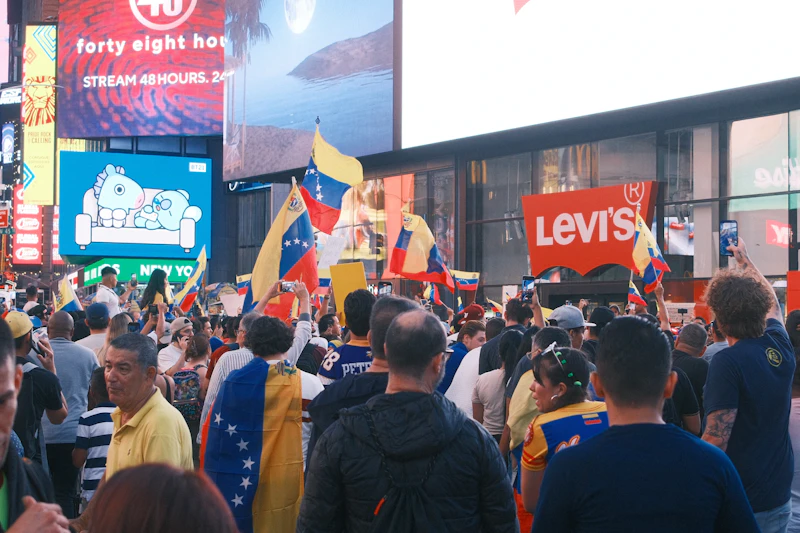
The response across Latin America has been fractious. Traditional U.S. allies like Colombia and Brazil have expressed cautious support, emphasizing the humanitarian catastrophe under Maduro. Meanwhile, left-leaning governments in Mexico, Bolivia, and Cuba have condemned the strike as a blatant violation of sovereignty and a return to gunboat diplomacy. The Organization of American States is deeply divided, mirroring the continent’s political polarization.
The Legal and Moral Justification
The administration’s legal rationale hinges on the 2019 recognition of Guaidó as Venezuela’s legitimate leader, arguing any request for assistance from his government is valid. Furthermore, they cite Article 51 of the UN Charter regarding self-defense. Critics, however, see a dangerous precedent of military intervention based on a contested political recognition, bypassing congressional authorization and the United Nations Security Council.
Humanitarian Crisis at the Epicenter
Beneath the geopolitical maneuvering lies a profound human tragedy. Years of economic collapse have driven nearly a quarter of Venezuela’s population to flee, creating a migration crisis. Hyperinflation, medicine shortages, and malnutrition are rampant. The military action, while potentially aimed at regime change, risks exacerbating this suffering in the short term, complicating aid delivery and potentially displacing more civilians.
Market Tremors and Oil Implications
Global oil markets reacted with immediate volatility. Venezuela sits on the world’s largest proven oil reserves, yet its production has collapsed to 70-year lows under mismanagement and sanctions. A protracted conflict or regime change could either further disrupt supply or, in the long term, unlock significant new production, reshaping global energy dynamics. Energy analysts are watching for any disruption to regional refining.
What Comes Next: Scenarios for Escalation
The path forward is fraught with uncertainty. The Maduro regime, backed by a loyal core of military leaders, could retaliate asymmetrically through cyberattacks or by encouraging irregular migration. A direct military confrontation with Russian or Iranian advisors on the ground remains a worst-case scenario. Alternatively, the show of force could fracture Maduro’s support, leading to a negotiated transition—the administration’s stated, though now forcefully pursued, goal.
A Defining Moment for U.S. Foreign Policy
This event marks a potential inflection point for the Trump administration’s foreign policy doctrine. Often characterized as ‘unpredictable’ or isolationist, the decisive military action demonstrates a willingness to use hard power in service of a specific ideological and strategic objective: rolling back socialist influence in the hemisphere. It is a stark message to adversaries and allies alike about U.S. red lines.
Conclusion: A Region on the Brink
The strike and the presidential address that followed have irrevocably changed the Venezuela crisis. What was a slow-burn political and economic struggle is now a live military confrontation with international dimensions. The coming days will reveal whether this calculated risk leads to a rapid political resolution or spirals into a protracted, destabilizing conflict. The stability of Latin America, and the contours of a new era of great-power rivalry, may well be decided on Venezuelan soil.