4 min read • 702 words
Introduction
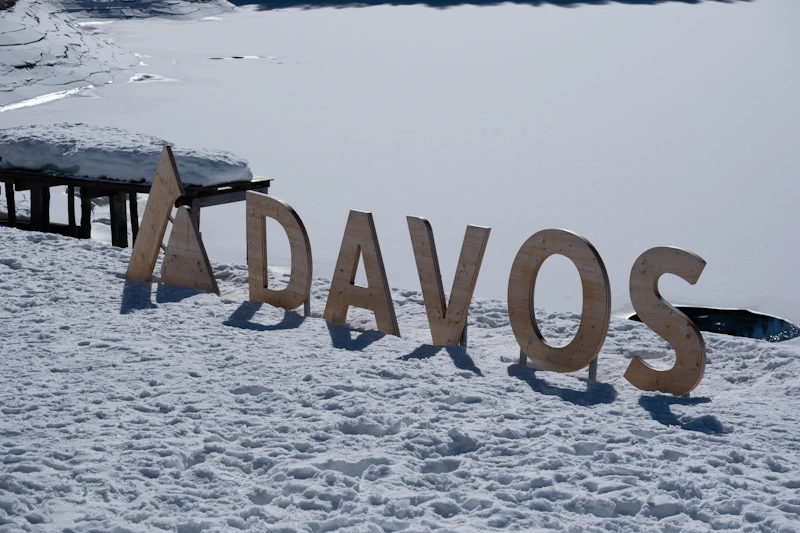
Against the pristine backdrop of the Swiss Alps, President Donald Trump delivered a bullish assessment of American economic might at the World Economic Forum in Davos. Yet, the specter of a controversial, unfulfilled territorial ambition—the purchase of Greenland—lingered, underscoring the unpredictable geopolitics defining his administration’s approach to global leadership and national interest.

A Declaration of American Economic Sovereignty
President Trump’s keynote speech served as a victory lap for his “America First” economic policies. He touted record-low unemployment, renewed trade deals, and robust stock markets as direct results of his administration’s focus on domestic deregulation and protectionist maneuvers. The message to the assembled global elite was clear: the United States, under his leadership, would negotiate from a position of unparalleled strength, putting its own prosperity before multilateral ideals.
The Ghost of Greenland: A Deal That Refuses to Melt
While the official agenda focused on finance, whispers of a frozen proposal thawed in the corridors. The President’s confirmed interest in purchasing the autonomous Danish territory of Greenland in 2019 was met with bewilderment and swift rejection. However, its mention at Davos signaled the idea’s symbolic resonance for Trump’s vision of legacy—a tangible, map-altering acquisition of strategic territory rich in resources and geopolitical value.
Strategic Calculus in a Warming Arctic
The fascination with Greenland is far from whimsical. Climate change is rapidly opening Arctic sea lanes and exposing vast deposits of minerals, oil, and gas. Control or influence over Greenland offers a commanding position in this new frontier. For an administration keen on energy dominance and countering Russian and Chinese polar ambitions, the world’s largest island represents a critical, if elusive, chess piece in a high-stakes geopolitical game.
Diplomatic Ripples and Allied Consternation
The public pursuit of Greenland caused a significant, if temporary, diplomatic rift with Denmark, a steadfast NATO ally. The Danish Prime Minister called the notion “absurd,” leading Trump to postpone a state visit. The episode highlighted a transactional style that often unsettles traditional alliances, where national assets are viewed through a prism of potential deals rather than immutable sovereign partnerships.
Davos: A Stage for Contrasting Worldviews
The World Economic Forum, traditionally a hub for globalist cooperation on climate and multilateral trade, provided a stark setting for Trump’s nationalist pitch. His presence created a compelling dichotomy, framing a central debate of our era: the tension between inward-focused sovereignty and interconnected global governance. His agenda stood in deliberate contrast to the forum’s broader themes of sustainability and collective action.
Beyond the Headlines: The “Many Meetings” Agenda
True to his pre-forum comments, the President’s schedule was packed with bilateral engagements. Key meetings included discussions with European Commission President Ursula von der Leyen on trade, and with leaders from Iraq, Pakistan, and Switzerland. These talks, often overshadowed by the broader rhetoric, represented the granular work of diplomacy, focusing on specific economic and security negotiations stemming from his “America First” principles.
Market Confidence and Critic’s Concerns
The President’s speech was engineered to bolster Wall Street confidence, emphasizing a business-friendly environment. However, economists and critics caution that the policies celebrated—including sweeping tax cuts and tariffs—carry long-term risks. They point to escalating national debt, the volatility introduced by trade wars, and the potential for inflationary pressure, arguing the current boom may not be sustainably built.
The Legacy of a Transactional Diplomacy
The Davos appearance, bookended by impeachment proceedings at home, will be remembered as a definitive articulation of Trumpian statecraft. It demonstrated a consistent framework where relationships, environmental policy, and even territory are assessed by a calculus of direct American gain. This approach has redefined norms and challenged the post-World War II international order, for better or worse.
Conclusion: An Unpredictable Path Forward
President Trump’s Davos chapter reinforces a tenure marked by economic reshuffling and diplomatic disruption. While the immediate goal was promoting investment, the subtext of Arctic ambition revealed a longer-term strategic hunger. As the 2026 election loomed, this performance underscored a clear choice for voters and the world: a continuation of this disruptive, deal-driven philosophy or a pivot toward more traditional global engagement. The echoes in the Alpine valley were of an America confidently marching to its own drum, leaving allies and adversaries alike to navigate the uncertain rhythm.