4 min read • 621 words
Introduction
The predawn hours over Venezuela shattered into a geopolitical flashpoint. Following a significant military strike, the world turned to Washington for explanation. In a high-stakes Saturday morning address, President Donald Trump framed the action, setting a new and volatile chapter in U.S.-Latin American relations.

A Statement from the White House
Speaking from the White House, President Trump confirmed U.S. forces executed a targeted operation against what he termed “illegitimate military assets” in Venezuela. His tone was stern, emphasizing the mission’s success and minimal collateral damage. He stated the action was a direct response to provocations threatening regional stability and American interests, a necessary measure after exhausting diplomatic avenues.
Context: A Nation in Crisis
To understand this escalation, one must view Venezuela’s prolonged collapse. Once South America’s richest oil producer, it now suffers hyperinflation, mass exodus, and humanitarian disaster. The political standoff between Nicolás Maduro’s socialist government and U.S.-backed opposition leader Juan Guaidó has frozen the nation in a dangerous stalemate, with multiple nations recognizing Guaidó as interim president.
The Justification: A Line Crossed
Trump’s remarks pointed to a specific catalyst. Administration officials, speaking on background, suggest intelligence indicated an imminent transfer of advanced weaponry to non-state actors deemed a direct threat. This, coupled with alleged attacks on U.S. diplomatic personnel, constituted what the President called a “red line.” The strike aimed to degrade this specific capability and send an unambiguous deterrent message.
Immediate Reactions and Global Ripples
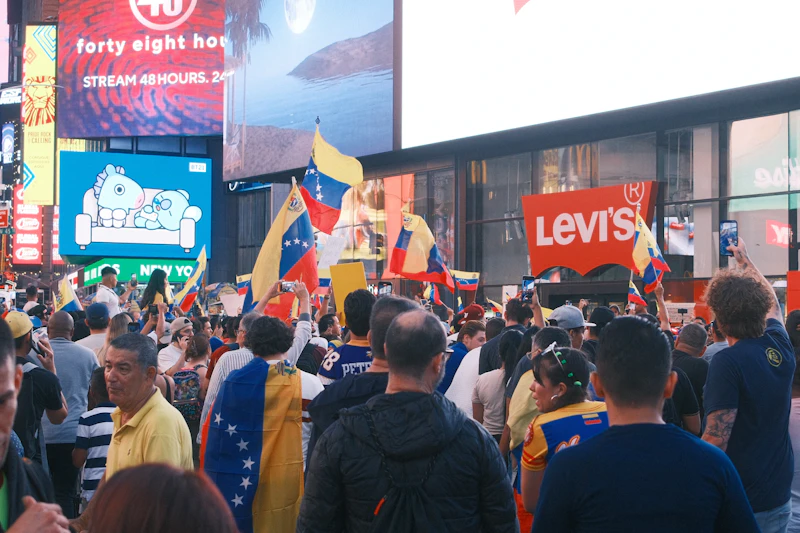
Reaction was swift and polarized. The Maduro government condemned an “act of war,” while Guaidó’s faction expressed cautious support for actions restoring constitutional order. Internationally, allies like Colombia and Brazil acknowledged the U.S. security concerns. Russia and China, key Maduro backers, denounced the strike at the UN Security Council, warning of unpredictable consequences.
Legal and Strategic Ambiguity
The move enters a legal gray zone. The White House likely invoked the President’s Article II authority as Commander-in-Chief to defend national security, avoiding a War Powers Act debate. Strategically, it marks a sharp pivot from the “maximum pressure” campaign of sanctions to direct kinetic action, raising questions about long-term objectives and exit strategy in a complex internal conflict.
Regional Anxiety and the Monroe Doctrine Shadow
Across Latin America, nerves are frayed. While some leaders quietly applaud pressure on Maduro, many fear regional destabilization and a return to heavy-handed U.S. interventionism, evoking the dark legacy of the Monroe Doctrine. The strike risks galvanizing Maduro’s domestic support by casting him as a victim of foreign aggression, potentially hardening the regime’s position.
Market Tremors and Oil Price Jitters
Global markets reacted with immediate volatility. Oil prices jumped over 3% on opening, reflecting fears of disruptions from Venezuela’s reserves or broader regional instability. Energy analysts are watching closely, as prolonged tension could reshape global crude flows and impact OPEC+ dynamics, adding another layer of complexity to the world’s economic recovery.
The Path Forward: Diplomacy or Escalation?
The critical question is what comes next. In his speech, Trump urged international partners to join in isolating the Maduro regime but offered no new diplomatic roadmap. The action could force renewed negotiations, or it may trigger a cycle of escalation. The administration’s challenge is to leverage this show of force into a coherent political strategy that avoids an open-ended quagmire.
Conclusion: A Precarious New Normal
President Trump’s address did not conclude a crisis; it inaugurated a more perilous phase. The strike against Venezuela represents a calculated gamble, raising the stakes in a hemisphere unaccustomed to such direct military intervention in this century. The world now watches to see if this bold move fractures a dictatorship or merely deepens a nation’s agony, reshaping America’s role in its own backyard for years to come.