4 min read • 721 words
Introduction
The world awoke to a stark escalation in the Western Hemisphere Saturday morning. Following a significant military strike against Venezuelan targets, President Donald Trump addressed the nation, framing the action as a necessary defense of regional stability and a direct message to the government in Caracas. His remarks, delivered from the White House, signaled a dramatic hardening of U.S. policy and raised immediate questions about the path forward in a long-simmering crisis.

A Pre-Dawn Operation and a Presidential Response
Details of the overnight operation remain classified, but early reports from the Pentagon describe it as a “large-scale” and “precision” action targeting key military infrastructure. The strike represents the most direct U.S. military intervention in Venezuela in decades, moving beyond sanctions and diplomatic pressure. President Trump, in his statement, asserted the strike was a proportional response to alleged provocations, though he did not specify a singular triggering event.
Trump’s Justification: Sovereignty and Security
In his address, the President articulated a clear doctrine. He stated the United States could not stand by while what he termed a “corrupt and oppressive regime” in Venezuela threatened American interests and regional partners. “The stability of our hemisphere is not negotiable,” Trump declared, linking Venezuela’s internal turmoil to broader concerns about drug trafficking, migration, and the influence of adversarial global powers. The rhetoric framed the action as protective, not aggressive.
Context: Years of Fractured Relations
This military action did not occur in a vacuum. U.S.-Venezuela relations have been in freefall since the presidency of Hugo Chávez. The Trump administration, like its predecessor, has refused to recognize Nicolás Maduro’s presidency since his controversial 2018 re-election, instead backing opposition leader Juan Guaidó. Years of crippling U.S. sanctions have failed to dislodge Maduro, whose government retains control of the military, creating a protracted stalemate that this strike seeks to shatter.
The International Reaction: A Divided Hemisphere
Global response was swift and fractured. Key U.S. allies, including Colombia and Brazil, issued cautious statements acknowledging the right to self-defense but stopping short of full endorsement. The Lima Group, a coalition of Latin American nations, is likely deeply divided. Conversely, nations like Russia, China, and Cuba condemned the strike as a blatant violation of international law and Venezuelan sovereignty, warning of dangerous escalation. The UN Security Council is expected to convene an emergency session.
Legal and Constitutional Questions
The strike immediately raises profound legal questions. The White House has not yet clarified under what specific congressional authorization the President acted. The War Powers Resolution requires notification within 48 hours, but the constitutional balance between executive action and congressional war powers is a perennial debate. Legal experts are scrutinizing whether the administration’s public justification meets established thresholds for unilateral defensive action under U.S. and international law.
On the Ground in Venezuela: Uncertainty and Defiance
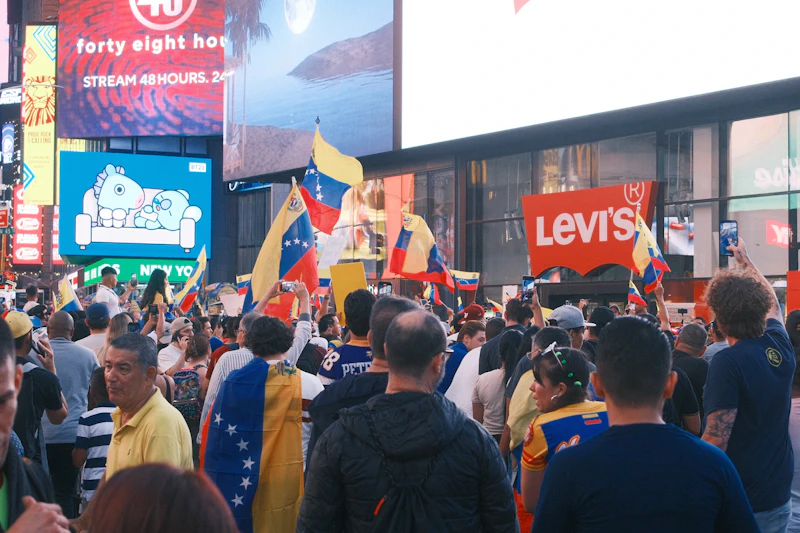
Within Venezuela, the immediate impact is one of heightened fear and nationalist mobilization. State media has broadcast images of military preparedness and defiant speeches from Maduro, who called the attack a “cowardly imperial aggression.” The humanitarian situation, already dire with hyperinflation and widespread shortages, could worsen significantly. The opposition’s response is mixed, with some celebrating the pressure on Maduro while others fear the action could consolidate his support by painting him as a victim of foreign intervention.
The Road Ahead: Escalation or Negotiation?
President Trump’s comments concluded with a warning that “all options remain on the table,” a phrase that leaves open the possibility of further military action. However, the path forward is perilously unclear. The strike could force Maduro to the negotiating table under duress, or it could embolden him to seek deeper alliances with Russia or Iran. It also risks triggering a broader regional conflict, drawing in neighboring states and creating a refugee crisis of unprecedented scale for South America.
Conclusion: A New and Dangerous Chapter
The U.S. strike marks a definitive pivot from economic to kinetic warfare in its Venezuela policy. While the Trump administration has framed it as a decisive move to end a chronic crisis, it has undoubtedly opened a new and dangerous chapter. The coming days will test the resilience of the Maduro regime, the cohesion of international response, and the strategic calculus in Washington. The ultimate outcome—whether it leads to a political solution or a protracted conflict—will reshape the geopolitical landscape of the Americas for a generation.