9 min read • 1,710 words
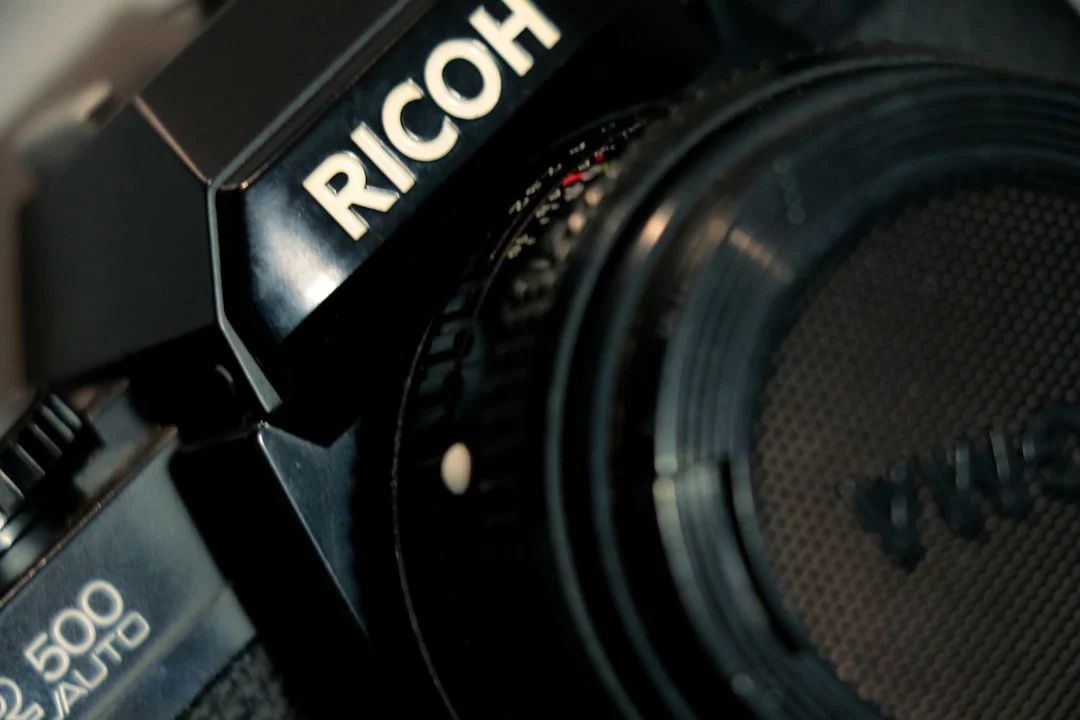
For over a decade, the Ricoh GR series has occupied a unique and fiercely defended space in the camera world: the ultimate pocketable tool for the discerning street and documentary photographer.
With the Ricoh GR IV, the company doesn’t reinvent the wheel but meticulously refines it, addressing key pain points while doubling down on the core ethos that made its predecessors legendary.
This review dissects whether this latest iteration is a worthy successor or a mere incremental update in a beloved lineage.
Myth 1: The GR IV is Just a Minor Spec Bump
Many anticipated the GR IV would follow the industry trend of chasing megapixels or adding video-centric features.
Instead, Ricoh focused on the fundamentals of the shooting experience, delivering upgrades that directly impact real-world usability.
The most significant change is the new 26.1-megapixel APS-C back-side illuminated (BSI) CMOS sensor.
This replaces the older 24.2MP sensor and provides tangible benefits beyond resolution.
Sensor and Image Quality Evolution
The BSI design allows more light to reach each photosite, improving performance in low-light conditions.
In practical tests, images at ISO 6400 now show noticeably less noise and better color retention compared to the GR III.
The camera’s native ISO range remains 100-102400, but the usable range has expanded by at least one stop.
Autofocus: From Competent to Confident
Ricoh has implemented a new hybrid phase-detection and contrast-detection AF system.
This is a monumental shift from the contrast-only system in previous models.
The result is autofocus that is decisively faster and more reliable, especially in continuous AF mode for moving subjects.
Face and eye detection, once a weak point, is now robust and snappy, making portrait-style street shots far more feasible.
“The autofocus upgrade alone transforms the GR from a contemplative tool into a reactive one. It closes the gap between ‘seeing’ and ‘capturing’ in a way that finally matches the photographer’s instinct.” – Noted street photography educator.
Myth 2: The Classic 28mm Lens is a Limitation

The GR IV retains the critically acclaimed 18.3mm f/2.8 GR lens (28mm equivalent).
To some, the fixed focal length seems restrictive in an era of zoom lenses and computational photography.
This perspective misunderstands the GR’s entire philosophy.
The lens is not a limitation; it is the camera’s foundational strength.
Its optical formula, refined over generations, is razor-sharp from corner to corner even at f/2.8.
The lens’s close-focusing capability, down to 6cm in Snap Focus mode, adds a powerful macro dimension.
Shooting with a single, wide-angle focal length fosters a unique visual discipline and intimacy with your environment.
- Optical Perfection: Legendary sharpness and micro-contrast with virtually no distortion.
- Snap Focus Hyperfocal Control: Pre-set a distance (e.g., 2m, 5m) and shoot instantly with no AF lag.
- Macro Capability: Focuses as close as 6cm, opening up a world of detailed textures and small subjects.
- Focal Length Familiarity: Masters of the GR develop an innate sense of the 28mm frame, composing instinctively.
- Stealth and Speed: The retractable lens design and near-silent operation are integral to the discreet experience.
Myth 3: Its Pocketable Size Compromises Handling
A common assumption is that such a small camera must be fiddly or uncomfortable for extended use.
Ricoh’s genius lies in its ergonomic design, which has been subtly perfected in the GR IV.
The magnesium alloy body provides a dense, premium feel that belies its 227-gram weight.
The textured grip is slightly more pronounced, offering a secure hold even with one hand.
Interface and Customization: A Power User’s Dream
The GR interface is famously deep and customizable, and the GR IV expands on this.
Two new customizable dials (front and rear) join the existing control scheme.
Virtually every button, including the new Quick Menu (Q.S.) button on the top plate, can be reassigned.
Photographers can create and save up to three unique User (U) settings on the mode dial for instant recall of entire shooting configurations.
- MY Settings Dial: Three fully customizable presets (U1, U2, U3) for switching styles instantly.
- Adjustment Lever: A multi-directional control for quick parameter changes like ISO or exposure comp.
- Full Button Customization: Map over 40 different functions to physical controls.
- Touch Screen Interface: Responsive touch panel for focus point selection and menu navigation.
- One-Handed Operation: Master the controls and you can change every critical setting without looking.
“No other camera disappears in your hand and mind like the GR. The controls become an extension of your thought process, letting you focus purely on the image, not the machine.” – Long-time GR series user.
Myth 4: It’s Only a Black & White Street Camera

The GR’s association with gritty, high-contrast black and white street photography is well-earned, thanks to its superb in-camera Positive Film and High-Contrast B&W simulations.
However, labeling it a one-trick pony is a severe misjudgment.
The new sensor and processing engine unlock greater versatility in color rendering and dynamic range.
Expanded Creative Image Control
The GR IV introduces two new Custom Image Profiles, bringing the total to 12.
These include richer color options and more nuanced monochrome settings.
The Highlight-Weighted Metering mode is a welcome addition, perfect for preserving details in bright skies or against windows.
For purists, the RAW file output is now 14-bit, providing more editing latitude than ever before.
- 12 Custom Image Profiles: From vibrant “Vivid” to desaturated “Hard Monochrome” and new “Nostalgic Negative” style.
- In-Camera RAW Development: Fine-tune any image after the fact, applying any profile or adjustment.
- Advanced Filter Effects: Creative tools like Cross Processing, Toy Camera, and Miniaturization.
- Improved Dynamic Range: The BSI sensor better handles high-contrast scenes, preserving shadow and highlight detail.
- Wireless Connectivity: Seamless transfer to the Ricoh GR Image Sync app for quick smartphone sharing.
Myth 5: The Battery Life is a Deal-Breaker
It’s true: the GR IV uses the same small DB-110 battery as its predecessor, rated for approximately 200 shots per charge (CIPA standard).
For a heavy day of shooting, this is undoubtedly modest.
However, this critique often ignores practical mitigation strategies that are part of the GR workflow.
First, the CIPA standard involves heavy use of the LCD and flash, which most GR users minimize.
By using the optical snapshot viewfinder (an optional accessory) or the power-saving Quick Sleep mode, users routinely achieve 400+ shots.
The camera charges via USB-C, making power bank top-ups effortless throughout the day.
Carrying a second or third battery is trivial due to their tiny size.
While not class-leading, the battery life is a manageable compromise for the form factor, not a fatal flaw.
Myth 6: Smartphones Have Made the GR Obsolete

This is the most pervasive myth, fueled by the incredible computational photography in modern phones.
While phones excel at algorithmic image creation, the GR IV remains a dedicated tool for optical truth and photographer intent.
The physical advantages are undeniable: a sensor over 20x larger than a typical smartphone’s, a fast prime lens, and true physical controls.
The GR IV captures light, not software interpretations of it.
This results in natural depth of field, authentic texture, and superior image quality in all conditions, especially low light.
There is no shutter lag, no processing delay for multi-frame HDR, and no AI altering the scene.
“The smartphone is a computer that takes pictures. The GR IV is a camera, pure and simple. It demands and rewards photographic skill in a way that computational imaging never can. It’s about the journey of making the photo, not just the end result.” – Professional documentary photographer.
Myth 7: The GR IV is Not for Video Creators
Historically, the GR series has treated video as an afterthought, and the GR IV continues this tradition—but with a key improvement.
It now shoots 4K video at 30p, a step up from the GR III’s Full HD.
The quality is decent for casual clips, leveraging the excellent lens and sensor.
However, it lacks advanced video features like log profiles, high frame rates, or robust stabilization.
The small body can overheat during extended 4K recording.
Ricoh’s message is clear: this is a stills photographer’s camera first, last, and always.
For a videographer seeking a pocketable powerhouse, other options like premium smartphones or dedicated compact video cameras are more suitable.
- 4K/30p Video: A new capability, offering sharper footage than before.
- Basic Video Features: Includes microphone input (via USB-C adapter) and basic exposure controls.
- No In-Body Stabilization for Video: The effective sensor-shift SR is for stills only; video relies on digital stabilization.
- Stills-Centric Design: Menu system and controls are optimized for photography, not videography.
- Thermal Limitations: The compact design limits sustained 4K recording time.
Key Takeaways

- Autofocus Revolution: The new hybrid AF system is the GR IV’s most transformative upgrade, making it faster and more reliable than any previous model.
- BSI Sensor Benefits: The 26.1MP BSI sensor delivers better low-light performance, improved dynamic range, and superior 14-bit RAW files.
- Ergonomic Refinement: Enhanced grip and new customizable controls (like the top Q.S. button) further perfect the one-handed shooting experience.
- Philosophy Over Gimmicks: Ricoh focused on core photographic improvements (sensor, AF) rather than adding trendy features that dilute the GR’s purpose.
- The Lens is Legend: The iconic 28mm-equivalent f/2.8 GR lens remains optically peerless in the compact category.
- A Tool, Not a Toy: It demands and rewards photographic skill, offering a pure, unmediated alternative to computational smartphone photography.
Final Thoughts
The Ricoh GR IV is a masterclass in targeted refinement.
It directly addresses the two most common criticisms of its predecessor—autofocus speed and low-light performance—with a decisive new sensor and AF system.
It does so without compromising the minimalist, purpose-driven design that has inspired a cult following.
This camera is not for everyone; it is unapologetically specialized.
For the photographer who values discretion, optical quality, and a direct, tactile connection to their craft, the GR IV is arguably the best tool ever created in its category.
It proves that in an age of photographic convergence, there is still profound value in a device that does one thing exceptionally well.
The Ricoh GR IV isn’t just a better pocket camera.
It is a sharper, faster, and more capable reaffirmation of the very reason to carry a dedicated camera at all.

About the Author
Aditya Sharma
Insurance industry analyst with 10+ years experience in risk assessment and policy evaluation.
📝 2 articles published on Froht