4 min read • 629 words
Introduction
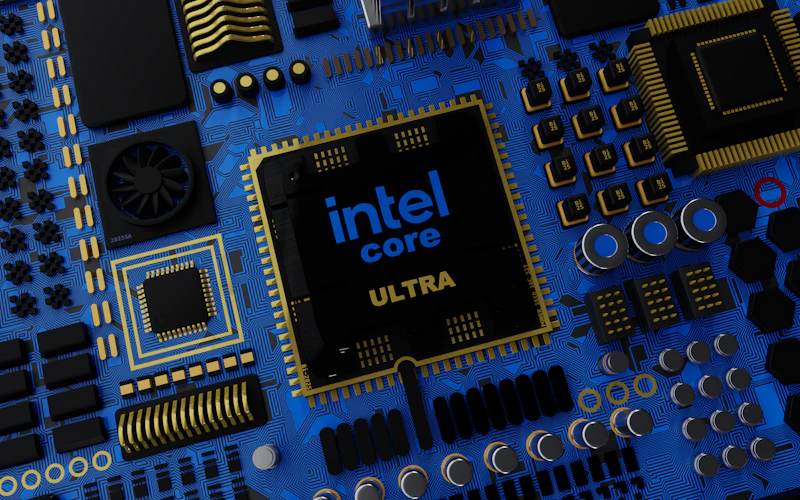
In a move poised to redefine the landscape of personal computing, Intel has officially unveiled its Core Ultra Series 3 processors. Built on the long-anticipated, cutting-edge Intel 18A manufacturing process, these chips represent more than just an incremental upgrade. They are the vanguard of a new generation of ‘AI PCs,’ engineered to bring unprecedented intelligence and efficiency to high-end ultraportable laptops, with the first devices landing on shelves this month.

The 18A Process: A Foundational Revolution
At the heart of this launch is Intel 18A, a manufacturing node the company has labeled as its ‘process leadership’ milestone. This technology, roughly equivalent to what competitors term ‘1.8nm,’ utilizes advanced RibbonFET transistors and PowerVia backside power delivery. This architectural shift allows for a dramatic increase in transistor density and energy efficiency. For users, this translates directly to laptops that can deliver blistering performance without sacrificing the battery life essential for mobile professionals and creators.
Architectural Overhaul: More Than Just a CPU
The Core Ultra Series 3 is architected as a complete system-on-a-chip (SoC). It integrates a new performance-core (P-core) and efficiency-core (E-core) microarchitecture, a significantly upgraded Arc GPU for robust graphics, and crucially, a dedicated Neural Processing Unit (NPU). This NPU is the engine for low-power, continuous AI task handling, enabling features like advanced background blur and gaze correction in video calls without draining the battery. It’s a holistic design philosophy moving beyond raw GHz.
The ‘AI PC’ Vision Comes to Life
Intel is betting big on the ‘AI PC’ as the next major platform shift. The integrated NPU in the Core Ultra Series 3 is designed to run AI workloads locally, a stark contrast to the cloud-dependent models of today. This means faster response times, enhanced data privacy, and the ability to use intelligent features anywhere. From real-time language translation and content creation assistants to adaptive system performance tuning, the chip is built to learn and anticipate user needs.
Market Impact and Competitive Landscape
This launch is a critical moment for Intel, reasserting its technological prowess against rivals like AMD and Apple’s ARM-based M-series chips. By targeting the premium ultraportable segment first, Intel aims to capture the mindshare of influencers, executives, and power users. Success here could cascade down to mainstream segments. The industry-wide push toward on-device AI, championed by Microsoft with its Copilot+ PC initiative, makes the timing of Intel’s architectural leap particularly strategic.
Immediate Applications and User Experience
Early adopters can expect tangible benefits. Content creators will see faster video rendering and smoother performance in creative suites leveraging AI filters. Gamers on the go will benefit from the capable Arc graphics. For business users, security features powered by AI for threat detection and productivity enhancements like intelligent summarization will become seamless parts of the workflow. All this will be packaged in sleek, thin-and-light designs that no longer force a compromise between form factor and capability.
Challenges and the Road to Adoption
The success of this platform hinges on software. Developers must optimize applications to leverage the NPU’s unique capabilities. Intel’s oneAPI toolkits and partnerships with major software houses will be key. Furthermore, convincing consumers of the ‘AI PC’ value proposition beyond marketing buzzwords is essential. The initial premium price point for devices featuring these chips may also limit early adoption to the high-end market before trickling down.
Conclusion and Future Outlook
Intel’s Core Ultra Series 3, forged on the 18A process, is more than a product launch; it’s a statement of intent. It marks the beginning of a fundamental shift from the CPU-centric PC to an intelligently distributed, AI-accelerated system. As the ecosystem matures, these processors could enable experiences we are only beginning to imagine, from truly personalized operating systems to revolutionary creative tools. The battle for the soul of the next-generation PC has begun, and Intel has just fired a formidable salvo.