4 min read • 776 words
Introduction
A pre-dawn military operation has plunged U.S.-Venezuela relations into a new and perilous chapter. Following a series of targeted airstrikes on strategic sites within the South American nation, global capitals are holding their breath, parsing President Trump’s subsequent remarks for clues to Washington’s endgame. This decisive action marks a dramatic escalation in a long-simmering confrontation, raising immediate questions about sovereignty, international law, and the potential for a regional conflagration.

A Swift and Stunning Escalation
According to Pentagon briefings, the operation, executed in the early hours, involved precision strikes against what U.S. officials describe as “command and control nodes” and facilities linked to the Maduro government’s military intelligence apparatus. Satellite imagery analyzed by independent security firms shows significant damage at several locations outside Caracas. The stated justification centers on what the administration calls “imminent threats” to U.S. personnel and interests, though specific intelligence remains classified.
The Presidential Address: Firmness and Warning
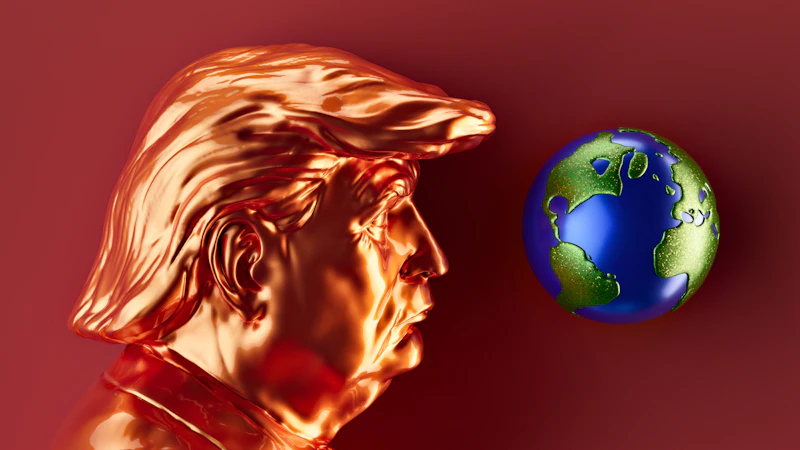
In a brief but forceful statement from the White House, President Trump framed the action as a necessary defensive measure. “We will not stand by while hostile regimes threaten our hemisphere’s stability,” he declared. His language was unequivocal, warning of “further consequences” should the Maduro government or its allies retaliate. The address, devoid of diplomatic nuance, underscored a clear shift from economic pressure to direct military intervention, a red line many analysts believed Washington would not cross.
International Reaction: A Chorus of Criticism
The global response has been swift and largely critical. Russia and China, key allies of Caracas, have condemned the strikes as a “brazen violation of the UN Charter” and an act of “gunboat diplomacy.” Closer to home, regional powers like Mexico and Argentina expressed deep concern, calling for an immediate de-escalation and a return to dialogue. The United Nations Security Council is scheduled for an emergency session, where a sharp diplomatic clash is anticipated.
Venezuela’s Defiant Response
From the Miraflores Palace, President Nicolás Maduro addressed the nation, portraying the attack as an unprovoked act of imperialist aggression. Surrounded by military commanders, he vowed resilience. “Our Bolivarian spirit cannot be bombed into submission,” he stated, announcing a nationwide mobilization of militia units. Crucially, he stopped short of declaring a direct military counterstrike against U.S. assets, a move that would almost certainly trigger a wider war.
Context: From Sanctions to Strikes
This military action did not occur in a vacuum. For years, the U.S. has led a campaign of maximum economic pressure against Venezuela, recognizing opposition leader Juan Guaidó as interim president in 2019. Crippling sanctions have exacerbated a profound humanitarian crisis, but failed to dislodge Maduro. The strikes represent a fundamental and risky tactical pivot, suggesting Washington’s patience with economic coercion has expired amidst assessments that Maduro was growing more entrenched.
The Legal and Ethical Minefield
Legal scholars are already debating the operation’s legitimacy. The White House is likely to cite the 2001 Authorization for Use of Military Force (AUMF) and Article 51 of the UN Charter regarding self-defense. However, critics argue attacking another nation’s sovereign territory without a UN mandate or a clear, immediate threat sets a dangerous precedent. The ethical implications of military action against a country already suffering from mass inflation, food scarcity, and collapsed healthcare are profound and troubling.
Regional Security Implications
The stability of the entire Latin American region now hangs in the balance. Neighboring Colombia and Brazil, which host U.S. military assets, have heightened alert levels. There are fears the conflict could spill over borders, triggering refugee flows and destabilizing fragile governments. Furthermore, the action risks galvanizing anti-U.S. sentiment across the region, potentially undermining decades of diplomatic work and empowering other adversarial states like Cuba and Nicaragua.
Market Turbulence and Oil Price Jitters
Global financial markets reacted with volatility, particularly in the energy sector. Venezuela sits on the world’s largest proven oil reserves, though its production has collapsed. The immediate fear is not a loss of Venezuelan crude, but a potential disruption to broader Gulf shipping lanes or retaliatory attacks on regional oil infrastructure. Brent crude futures jumped over 4% in early trading, a spike that could worsen inflationary pressures worldwide if sustained.
Conclusion: An Uncertain and Dangerous New Phase
The U.S. strikes in Venezuela have irrevocably altered the geopolitical landscape. The policy of containment has been replaced by one of direct confrontation. The immediate future hinges on Maduro’s next move and the international community’s ability to forge a unified response. While the Trump administration has demonstrated its willingness to use force, the path to a stable resolution appears more distant than ever. The world now watches to see if this shockwave subsides or triggers the earthquake of a wider war, with consequences far beyond the Caribbean coast.