10 min read • 1,953 words
The hum of a drone is a familiar sound across American farms, construction sites, and emergency response scenes, a testament to a technology that has revolutionized entire industries.
Insurance policies, terms, and coverage vary by provider and location. The information provided is for educational purposes only. Please consult with a licensed insurance professional for specific advice regarding your coverage needs.
That sound, however, is now at the center of a seismic geopolitical and economic shift, as the U.S. government moves decisively to sever its reliance on foreign manufacturers.
In a landmark decision with profound implications, the Federal Communications Commission has effectively banned the import of new models of foreign-made drones, targeting the market-dominant Chinese companies that have powered America’s drone economy for over a decade.
The FCC’s Decisive Move: Understanding the “Covered List” Ban
On Monday, the Federal Communications Commission (FCC) announced a sweeping prohibition on the importation and authorization of new models of foreign-made drones and their critical components.
The action specifically names industry giants like China’s DJI and Autel, citing “unacceptable risks to U.S. national security.” This is not a standalone executive order but a formal addition to the FCC’s Covered List, a powerful regulatory instrument created under the Secure and Trusted Communications Networks Act of 2019.
Placement on this list means these companies’ equipment is deemed a threat to the integrity of U.S. communications networks and critical infrastructure.
The Legal Mechanism Behind the Ban
The FCC’s authority stems from its role in certifying that electronic devices do not cause harmful interference and comply with technical standards.
By adding these drone manufacturers to the Covered List, the Commission can now deny or revoke the necessary equipment authorization for any new drone model they produce.
Without this authorization, devices cannot be legally imported, marketed, or operated within the United States.
Immediate vs. Long-Term Impact
Critically, this ban applies to new models submitted for authorization after the listing date.
Drones and components already authorized and in the supply chain—potentially millions of units—can still be sold and used for now.
This creates a phased transition but signals the end of the road for the next generation of consumer and commercial drones from these companies in the U.S. market.
A Long-Simmering Conflict: The Road to the Drone Ban

This FCC action is not a sudden development but the culmination of a multi-year, cross-agency campaign fueled by intensifying U.S.-China technological rivalry.
For years, agencies like the Department of Defense, Department of Homeland Security, and the FCC itself have issued warnings about drones manufactured in China.
The core allegation is that these devices could be used for data espionage or even as potential vectors for cyber-attacks on critical systems.
“This is the regulatory hammer finally dropping. We’ve seen the warnings, the NDAA restrictions, and the ‘Entity List’ placements. The FCC’s move systematically cuts off the legal commercial pathway for these drones to enter the country, which is a far more comprehensive approach,” stated a former senior advisor for cybersecurity policy at DHS.
The concern centers on the vast amounts of sensitive data drones collect: high-resolution imagery, precise GPS coordinates, flight paths, and network connection details.
U.S. authorities fear this data could be accessed by the Chinese government under its National Intelligence Law, which mandates organizations assist with state intelligence work.
Previous steps included the Department of Interior grounding its fleet of DJI drones in 2020 and Congress banning Pentagon purchases of Chinese drones through the National Defense Authorization Act (NDAA).
Market Upheaval: The Staggering Dominance of DJI
To understand the scale of this disruption, one must grasp DJI’s near-total market dominance.
The Shenzhen-based company controls an estimated 70-80% of the global commercial and consumer drone market, and an even higher share within the United States prior to these restrictions.
Its products are ubiquitous due to their superior technology, reliability, and integrated ecosystem at competitive price points.
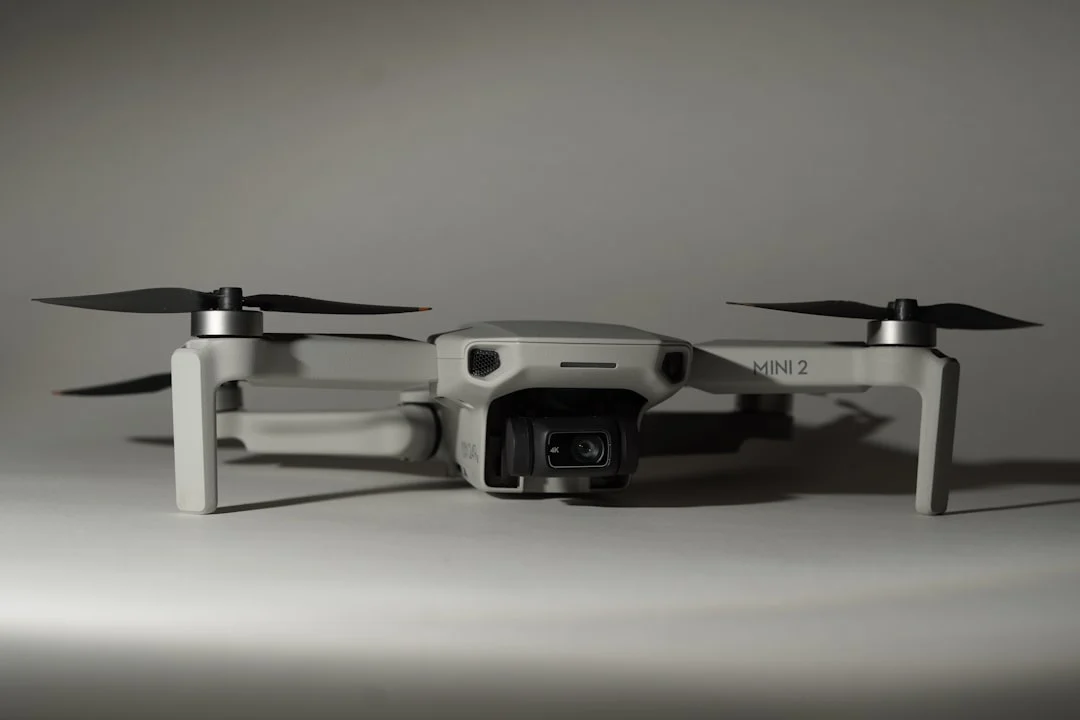
- Consumer & Prosumer Drones: Models like the Mavic, Air, and Mini series dominate photography, videography, and hobbyist use.
- Agricultural Drones: DJI’s Agras series is a leader in precision crop spraying and field analysis.
- Public Safety Drones: Used by thousands of police, fire, and search-and-rescue departments nationwide for situational awareness.
- Infrastructure & Construction: Essential for surveying, mapping, inspection, and progress tracking on job sites.
- Cinematography: The standard tool for film and television production, enabling complex aerial shots.
- Environmental Monitoring: Used for wildlife tracking, forest management, and disaster assessment.
Autel Robotics, another Chinese firm, holds a smaller but significant share, particularly in the public safety and enterprise sectors.
The immediate void created by their exclusion is colossal, representing billions of dollars in annual sales and affecting hundreds of thousands of American operators.
Ripple Effects Across the American Economy

The ban’s impact will cascade far beyond the drone manufacturers themselves, touching every sector that has come to rely on this affordable, capable technology.
The economic calculus for American businesses is now being rewritten overnight.
Cost and Capability Shock
The most immediate effect will be a dramatic increase in costs and a potential short-term reduction in capability.
American and allied alternatives, while improving, are often two to three times more expensive than comparable DJI models.
Small businesses, independent contractors, and farmers who built their operations around affordable drone technology now face a severe financial hurdle.
Sector-Specific Disruptions
In agriculture, the loss of low-cost, high-capacity spraying drones could impact crop yield optimization and input costs for farmers.
For first responders, the transition may force difficult budget choices or a period of using older, potentially less secure technology.
The construction and insurance industries, which use drones for efficient inspections and claims adjustments, will see project costs rise and timelines potentially extend.
“We’re looking at a classic security-versus-convenience trade-off, but on a multi-billion-dollar scale. The security concerns are valid, but the transition will be painful. Many small operators simply cannot absorb a 300% cost increase for equivalent capability without significant business model changes,” explained the CEO of a midwestern agricultural drone services company.
The Supply Chain Crucible: Building a Domestic Alternative
The ultimate goal of this and related policies is to catalyze a secure, domestic drone industry.
This is a monumental challenge, as DJI’s dominance is built on a deeply integrated, cost-efficient, and mature supply chain almost entirely based in China.
Building a parallel, trusted ecosystem from the ground up involves every layer of production.
- Advanced Manufacturing: Precision fabrication of airframes, gimbals, and mechanical systems.
- Semiconductor Sourcing: Secure access to flight controllers, image processors, and communication chips, many of which are also produced in Asia.
- Camera and Sensor Technology: Developing or sourcing high-resolution, lightweight cameras and LiDAR units from trusted partners.
- Software Ecosystem: Creating intuitive flight control apps, mission planning software, and data processing platforms.
- Battery Production: Establishing reliable supply for the high-density lithium-polymer batteries essential for flight time.
- Global Positioning Components: Integrating secure, reliable GPS and other positioning, navigation, and timing (PNT) systems.
Congress has attempted to fuel this shift through programs like the American Security Drone Act and grants under the CHIPS and Science Act.
Companies like Skydio, Brinc, and Shield AI are emerging as U.S. leaders, but they currently serve a fraction of the market DJI once did.
The Global Landscape: Allies, Alternatives, and the “China+1” Strategy

The United States is not alone in its concerns, and its actions will influence a global realignment in the drone industry.
Several key allies are pursuing similar, if sometimes less absolute, paths to reduce dependence on Chinese drone technology.
- Japan: Has allocated significant subsidies to encourage domestic drone development and adoption for critical infrastructure.
- United Kingdom: Government agencies are under directives to assess and mitigate security risks from Chinese drones.
- Australia: Has issued strong advisories and restrictions on the use of certain foreign-made drones for government work.
- European Union: While more fragmented, there is growing debate over cybersecurity certification and potential restrictions.
- India: Actively promoting a “Made in India” drone program with import bans and production-linked incentives.
This global shift is accelerating the “China+1” supply chain strategy, where companies seek alternative production bases.
Nations like South Korea, Taiwan, and Vietnam, as well as allied partners in Europe, could benefit as destinations for drone manufacturing investment.
The fragmentation of the global tech ecosystem into competing spheres of influence appears to be solidifying in the aerospace sector.
Legal Challenges and the Path Forward for Incumbents
DJI and other affected companies are not accepting this ban passively.
They are expected to mount significant legal and public relations challenges to overturn or delay the FCC’s ruling.
Their arguments will likely focus on several key points.
Potential Legal Avenues
First, they may challenge the FCC’s statutory authority to make national security determinations, arguing that is the purview of agencies like DHS or the Department of Defense.
Second, they could file suit claiming the action is arbitrary and capricious, lacking sufficient evidence of a widespread, proven threat.
Third, they may argue it constitutes a de facto embargo without due process, potentially violating trade agreements.
The Public Relations Battle
Beyond the courts, these companies will intensify campaigns to highlight their product security measures, such as local data mode options that prevent internet transmission.
They will also emphasize the economic harm to American users and the potential safety risks if older, unpatched drones remain in service due to a lack of new options.
“The legal battle will hinge on the standard of evidence for a ‘national security threat.’ The government’s case is based on potential and theoretical vulnerabilities, while DJI will point to a decade of widespread use without a single publicly documented case of data exfiltration or sabotage. It’s a precedent-setting case for how the U.S. regulates foreign tech,” noted a partner at a Washington D.C. law firm specializing in international trade and technology.
Key Takeaways

- The FCC ban on new foreign drone models is a pivotal, regulatory action with immediate and long-term consequences for the U.S. commercial landscape.
- Market leader DJI, controlling 70-80% of the U.S. market, is the primary target, creating an enormous void for businesses and consumers.
- The core driver is national security, centering on fears of data espionage and cyber vulnerabilities under China’s National Intelligence Law.
- American operators face a severe cost shock, as trusted domestic alternatives can be 200-300% more expensive than banned models.
- A secure, domestic supply chain is a national priority but will take years and significant investment to mature and compete on scale and price.
- The move aligns with a global trend among U.S. allies to reduce technological dependence on China, reshaping the international drone industry.
- Legal challenges from affected companies are inevitable and could shape future tech trade policy.
Final Thoughts
The FCC’s drone ban marks the end of an era of cheap, ubiquitous aerial technology and the beginning of a more fragmented, security-conscious, and expensive chapter.
It represents a clear verdict that the economic benefits of Chinese-made drones are now outweighed by perceived strategic risks in the eyes of U.S. policymakers.
The transition will be turbulent, imposing real costs on American enterprises and testing the resilience of the innovation ecosystem the policy seeks to foster.
Success hinges not just on keeping certain drones out, but on effectively building a viable, competitive, and trusted alternative industry in.
The hum over American fields and cities will continue, but its source—and the complex web of security, economics, and geopolitics it carries—has been fundamentally altered.

About the Author
Alex Turner
Alex is a science and technology writer with a background in computer science. He makes complex tech topics accessible and engaging for everyday readers.
📝 27 articles published on Froht