4 min read • 778 words
Introduction
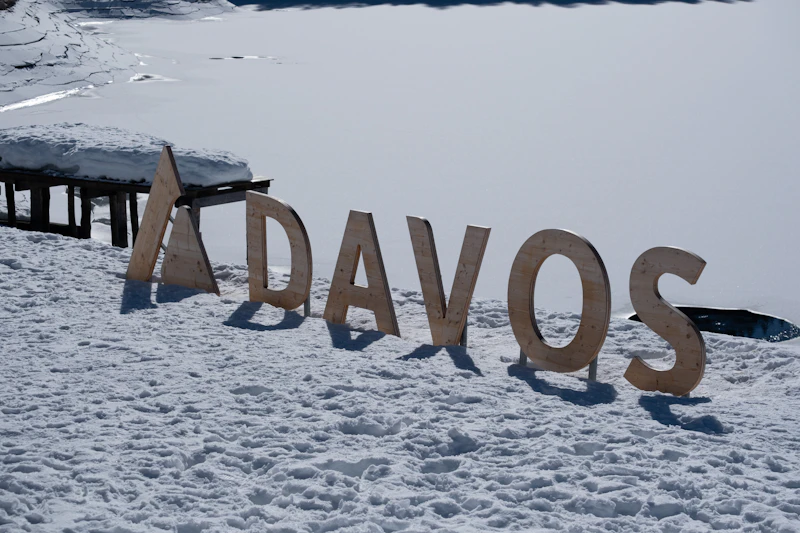
The alpine air of Davos, Switzerland, crackled with more than just winter chill this year. The World Economic Forum’s annual gathering became an unlikely stage where the resurgent political specter of Donald Trump converged with the relentless march of artificial intelligence. This collision of electoral uncertainty and technological determinism framed a pivotal question for global leaders: is the future being shaped by ballots or algorithms?

A Political Ghost in the Conference Halls
Donald Trump’s presence at Davos was felt not in person, but as a pervasive, dominating subtext. His strong performance in the Iowa caucuses, occurring just as the forum commenced, sent a palpable ripple through the insulated world of global elites. Policy discussions on trade, climate, and security were suddenly shadowed by the very real prospect of a dramatic shift in U.S. foreign policy come November.
For many delegates, the scenario presented a profound dilemma. Engaging with the current U.S. administration felt necessary, yet planning for a potential alternative reality became a urgent, behind-closed-doors exercise. The uncertainty underscored how geopolitical stability is now held hostage to domestic political cycles, forcing a recalibration of long-term international strategies on the fly.
The AI Architects Seize the Narrative
If Trump represented a disruptive past and present, the coterie of AI executives present embodied the claimed future. Leaders from OpenAI, Anthropic, and other frontier labs were not merely attendees; they were courted as key stakeholders in humanity’s next chapter. Their message was one of both breathtaking promise and sober responsibility, positioning their technology as the central tool for solving the world’s greatest challenges.
From revolutionizing drug discovery to optimizing climate models, the use cases presented were compelling. Yet, this narrative carefully sidestepped more immediate concerns about job displacement, market concentration, and the sheer computational resources required. The pitch was strategic: frame AI not as a sector, but as the new foundational layer for all sectors, from healthcare to finance to government itself.
The Midterm Exam: AI’s Political Trial by Fire
Beyond the theoretical discussions, a stark practical test for AI looms: the 2026 U.S. elections. Davos conversations revealed deep anxiety among tech and policy leaders about the weaponization of generative AI for hyper-realistic disinformation. The potential for AI-generated deepfakes to impersonate candidates, fabricate events, or sow chaos in electoral processes is no longer speculative—it’s an imminent threat.
This “AI midterm” presents a paradox. The same companies showcasing their tools for global good are racing to mitigate the destructive potential of their own creations. The forum served as a stage for pledges of collaboration with election integrity bodies, but concrete, interoperable plans remained frustratingly vague. The trust deficit is vast.
ChatGPT and the “Last Resort” Dilemma
A particularly revealing thread involved the internal safeguards of systems like ChatGPT. References to a “last resort” protocol—a final layer of ethical constraint to prevent the model from generating harmful content—sparked intense debate. This admission implicitly acknowledged that all other safety filters are potentially fallible, raising a chilling question: what constitutes a “last resort” scenario, and who decides?
This technical detail opened a philosophical chasm. It frames advanced AI not as a perfectly controlled tool, but as a force requiring emergency brakes. For policymakers, the implication is clear: relying solely on corporate self-policing is a risky strategy. The discussion pivoted to the need for external, auditable oversight mechanisms for these ultimate kill-switches.
The Clash of Timelines and Power
The core tension at Davos was a clash of timelines and influence. Political power, exemplified by the Trump phenomenon, operates on a short-term, volatile cycle measured in news cycles and election dates. Technological power, embodied by AI, claims a long-term, deterministic arc, promising to reshape decades. Yet, each seeks to use the other: politicians eye AI for economic growth and geopolitical advantage, while tech leaders need political favor to avoid stringent regulation.
This creates a dangerous vacuum. As leaders focus on either the immediate political storm or the distant technological horizon, the critical medium-term—the messy implementation, the labor market transitions, the democratic safeguards—risks being neglected. The forum highlighted a world brilliantly diagnosing future shocks but struggling to govern the present.
Conclusion: A Fork in the Alpine Path
The 2026 Davos forum will be remembered as the moment two formidable futures arrived at the same door. The path forward is neither purely political nor purely technological. It demands a new governance synthesis that can withstand the volatility of populist waves while ethically steering technological transformation. The alternative is a world where political turbulence and unchecked AI compound each other’s dangers. The discussions in the Alps made one thing clear: the time for choosing which future we build is rapidly narrowing.