5 min read • 802 words
Introduction
A quiet settlement in a California courtroom has amplified a deafening question about the devices in our homes. Google has agreed to pay $68 million to resolve a class-action lawsuit alleging its Assistant AI improperly recorded private conversations. This resolution doesn’t just signal a costly corporate misstep; it pulls back the curtain on the hidden, human-powered machinery behind our seemingly seamless voice-activated world.

The Trigger That Wasn’t There
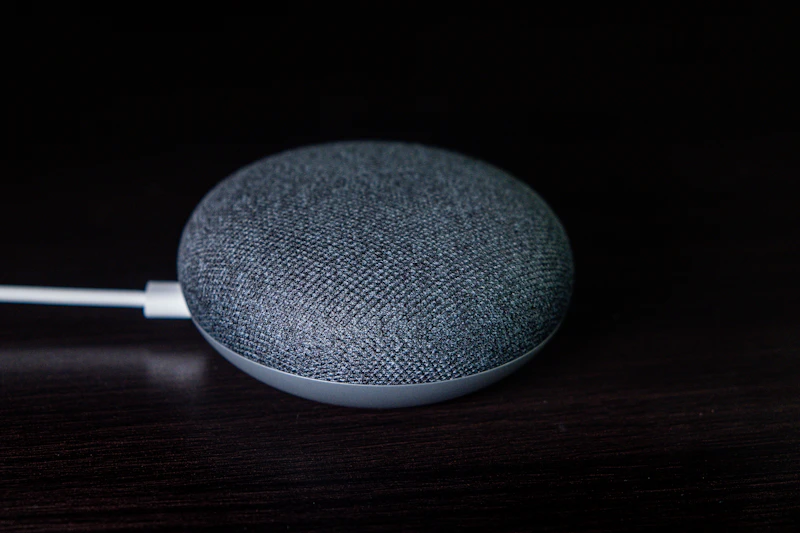
The core of the lawsuit centered on a phenomenon known as “False Accepts.” This occurs when smart devices mistakenly activate, interpreting random background noise or unrelated speech as their wake word, typically “Hey Google” or “OK Google.” In these uninvited moments, the lawsuit alleged, Google’s devices began recording. These accidental snippets, sometimes containing deeply personal conversations, were then allegedly transmitted to Google’s servers for analysis. The company was accused of unlawfully capturing confidential communications without meaningful user consent, turning ambient noise into a privacy violation.
A Whistleblower’s Revelation
The scandal first came to light not through a regulatory audit, but via investigative journalism. In 2019, VRT NWS, a Belgian public broadcaster, published a bombshell report. Their source was a contractor tasked with reviewing audio clips to improve Google Assistant’s speech recognition. The contractor revealed that they regularly heard private moments—intimate conversations, arguments, even professional meetings—that were clearly not intended for Google. Crucially, the report stated these recordings often contained sensitive information like names, addresses, and medical details, and could be easily traced back to specific user accounts.
The Human in the AI Loop
This exposure highlighted a critical, often obscured facet of artificial intelligence: the human training pipeline. While marketed as pure AI, services like Google Assistant rely heavily on human reviewers to transcribe and label ambiguous audio. This teaches the algorithms to better understand accents, colloquialisms, and noisy environments. The VRT report shattered the illusion of a fully automated system, revealing that strangers might be listening to what users believed were private interactions with their device. This practice, while common in tech, collided violently with consumer expectations of privacy within their own homes.
Consent in a Post-Trigger World
The legal battle hinged on the adequacy of Google’s consent mechanisms. The plaintiffs argued that burying the possibility of human review in lengthy terms of service was insufficient, especially for recordings initiated by mistake. They contended that users could not reasonably consent to being recorded by a device that activated without their command. This challenges the very foundation of how tech companies obtain permission for data collection, suggesting that for ambient listening technologies, a new, more explicit standard is required—one that accounts for technological failure, not just intended use.
The $68 Million Reckoning
Filed in a San Francisco federal court, the proposed settlement sees Google paying $68 million into a fund without admitting wrongdoing. While a significant sum, it pales in comparison to the company’s quarterly revenue. The money will be distributed to potentially millions of U.S. users who owned certain Google Home, Pixel, and other Assistant-enabled devices between specific dates. Each individual payout will be modest, but the collective penalty serves as a stark market signal. It follows a 2026 settlement where Google paid $100 million to Illinois residents over separate privacy violations, indicating a pattern of regulatory and legal friction.
Industry-Wide Echoes
Google is far from alone in this arena. Amazon settled a similar lawsuit regarding Alexa recordings for $30 million in 2026. Apple, Meta, and Microsoft have all faced scrutiny and litigation over voice data practices. This creates a pattern of industry behavior where rapid deployment of listening technologies outpaced the development of robust privacy frameworks. The Google settlement thus acts as a precedent, potentially strengthening legal arguments in pending cases against other tech giants and forcing a sector-wide reevaluation of data handling protocols.
Beyond the Payout: Shifting Policies
In the years since the scandal erupted, Google and its peers have made policy changes. Google now allows users to opt-out of voice recording storage entirely and has made its human review processes more transparent. It also implemented auto-deletion controls for audio data. However, critics argue these are retroactive fixes applied after getting caught. The fundamental tension remains: balancing the immense data hunger required to refine AI with the fundamental human right to privacy, particularly within the sanctity of one’s home.
Conclusion: The Unsettled Future of Listening
The $68 million settlement closes a legal chapter but opens a broader societal debate. As AI assistants become more embedded in our lives—in our phones, cars, and appliances—the line between helpful tool and intrusive monitor blurs. This case underscores that technological advancement cannot trample ethical boundaries. The future will demand not just better algorithms to avoid “False Accepts,” but stronger, more intuitive privacy laws, transparent corporate practices, and a public that is critically aware of the trade-offs inherent in inviting always-listening devices across their thresholds. The true cost of convenience is still being calculated.