3 min read • 566 words
Introduction
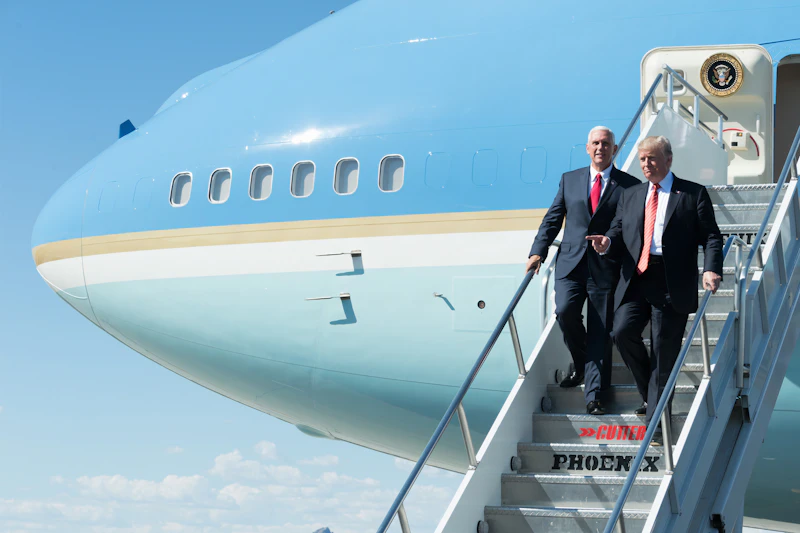
A high-stakes diplomatic mission was unexpectedly grounded on Tuesday as the iconic presidential aircraft, Air Force One, experienced a mechanical malfunction shortly after takeoff. The incident forced President Donald Trump to deplane and await a backup aircraft, causing a significant delay to his journey to the World Economic Forum in Davos, Switzerland. This rare operational hiccup underscores the immense logistical complexity and security protocols surrounding presidential travel.

The Interrupted Departure
The modified Boeing 747-200B, tail number 28000, departed from Joint Base Andrews in Maryland as scheduled. However, the flight was abruptly cut short. According to the US Network Pool report, the aircraft was forced to return to its point of origin due to an unspecified mechanical issue. The nature of the problem was not immediately disclosed, but such incidents trigger stringent safety protocols, mandating an immediate return for assessment.
Logistical Scramble and Delay
Upon landing back at Andrews, President Trump and his delegation disembarked. The White House travel team then initiated contingency plans, which involved preparing a replacement aircraft. This process, encompassing security sweeps, cargo transfer, and crew reassignment, consumed valuable time. The President eventually boarded a backup VC-25A, the identical sister plane to the primary Air Force One, but the entire complication resulted in a departure delay exceeding two hours.
The Anatomy of Air Force One
“Air Force One” is not a single plane but the radio call sign for any Air Force aircraft carrying the Commander-in-Chief. The fleet consists of two heavily customized Boeing 747-200B jets, each a flying White House. These aircraft are equipped with advanced secure communications, defensive countermeasures, and medical facilities. Their maintenance is meticulous, making in-flight mechanical issues exceptionally rare and noteworthy events in presidential travel history.
Historical Context of Presidential Flight Issues
While uncommon, this is not the first time a presidential aircraft has faced technical troubles. In 2015, a press charter plane in the presidential fleet made an emergency landing. More famously, in 1998, President Bill Clinton’s trip to Africa was delayed by an engine problem on his 747. Each incident prompts rigorous reviews by the 89th Airlift Wing, the elite unit responsible for all executive air transport, to prevent recurrence.
Impact on the Davos Agenda
The delay compressed President Trump’s already tight schedule at the World Economic Forum, a key gathering of global political and business leaders. His planned address, promoting an “America First” economic vision, remained a central event. However, the late arrival potentially limited crucial sideline diplomacy and meetings with other world leaders, which are often the forum’s most significant outcomes, adding an unintended layer of complexity to the diplomatic mission.
Security and Protocol Implications
An incident like this tests the seamless execution of presidential movement, a process known as “The Bubble.” Switching aircraft mid-mission involves significant security reassessments and coordination with the Secret Service. Every piece of luggage and cargo must be rescreened, and the new aircraft undergoes thorough checks. The smooth execution of this backup plan, albeit delayed, demonstrates the robustness of these fail-safe protocols.
Conclusion and Future Outlook
Tuesday’s incident serves as a stark reminder that even the most advanced and carefully maintained systems are not infallible. It highlights the unparalleled preparedness required for presidential logistics. As the current Air Force One fleet ages, the incident may also fuel discussions around the ongoing development of their replacements—new Boeing 747-8 aircraft, which are years behind schedule and over budget, promising next-generation reliability for future commanders-in-chief.