10 min read • 1,852 words
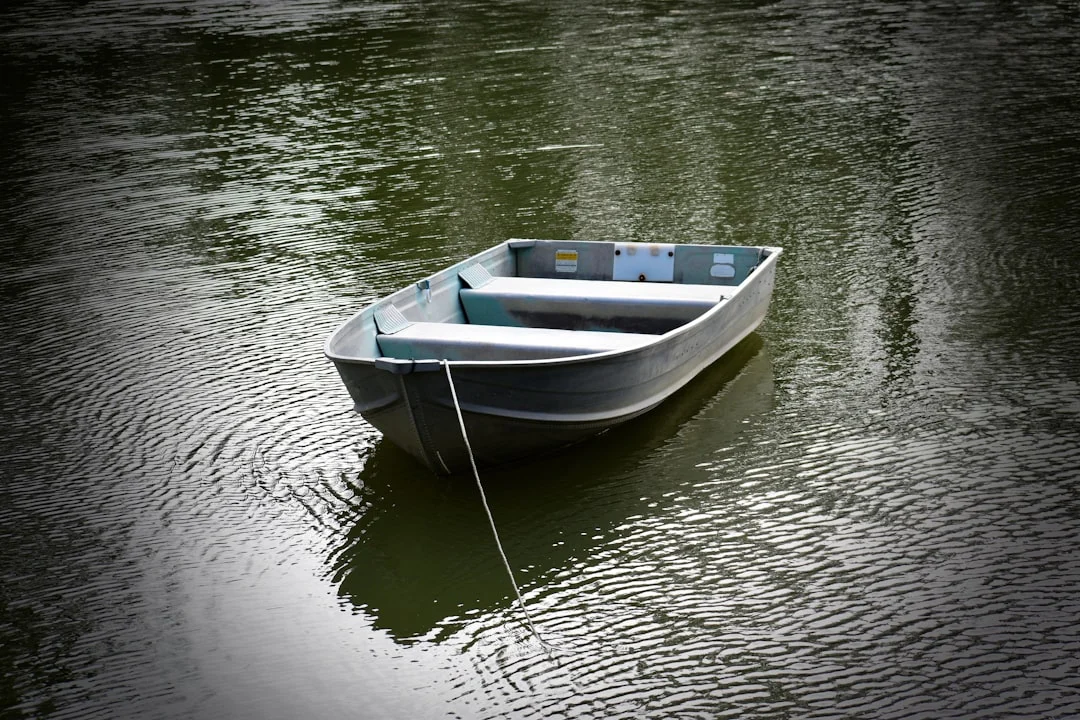
The image is one of the most iconic in modern cinema: Captain Jack Sparrow and Will Turner, trapped in a sinking ship, commandeer a small dinghy, flip it upside down, and use it as a makeshift diving bell to walk across the seafloor. It’s a moment of desperate, swashbuckling ingenuity that feels perfectly in character for the Pirates of the Caribbean universe.
But could this fantastical escape plan actually work in the cold, hard light of physics and physiology? We’re diving deep—with a properly engineered diving bell, of course—to separate Hollywood spectacle from submerged science.
This investigation isn’t just about a movie scene; it’s a portal into the history of underwater exploration, the brutal physics of pressure, and the limits of human endurance.
The Sparrow Maneuver: Scene Breakdown
In Dead Man’s Chest, our heroes are aboard the Edinburgh Trader as it is dragged to the depths by the Kraken. With seconds to spare, Jack hatches his plan.
He and Will overturn a wooden longboat, trap a pocket of air inside it, and submerge. The film shows them walking along the sandy bottom in what appears to be shallow, sunlit water, eventually emerging safely far from the wreck.
The scene presents the overturned boat as a perfect, mobile air bubble. It implies stability, breathable air for an extended period, and manageable pressure, all while allowing for leisurely pedestrian travel underwater.
It’s a brilliant cinematic shorthand for cleverness under pressure. The reality, however, would be far more terrifying and almost certainly fatal.
The Real-World Precedent: A History of Diving Bells

Jack’s idea is not without historical merit. The core concept is that of a diving bell, one of humanity’s oldest tools for underwater work.
These were rigid chambers, open at the bottom, that trapped air when lowered into the water, allowing occupants to breathe for a time.
Ancient Ingenuity
The earliest recorded use dates back to Aristotle in the 4th century BC. He described divers using an inverted kettle to breathe while retrieving sunken objects.
Alexander the Great is famously said to have descended in a primitive glass barrel, according to medieval legends, to witness the wonders of the deep.
The Evolution to Modern Systems
In the 16th and 17th centuries, inventors like Guglielmo de Lorena and Edmund Halley created more sophisticated bells.
Halley’s 1717 design featured a weighted barrel with a glass viewport and a system to replenish air using sent-down barrels, allowing for hours of submersion.
These were the direct precursors to the modern atmospheric diving suit and submersible. The principle is sound: a rigid structure can maintain an air pocket against the encroaching water pressure.
The Physics of Pressure: Where the Plan Sinks
This is where Jack’s charming plan collides with immutable physical law. The central challenge isn’t just air; it’s hydrostatic pressure—the weight of the water column above you.
Pressure increases by approximately 1 atmosphere (atm) for every 10 meters (33 feet) of depth. This force compresses air and has dire consequences for the human body.
Air Compression and Volume Loss
As you descend, the trapped air pocket inside the bell is squeezed. Boyle’s Law states that at a constant temperature, the volume of a gas is inversely proportional to the pressure.
At just 10 meters down, pressure is 2 atm. The air volume inside the overturned boat would be compressed to half its surface volume.
At 30 meters (a plausible depth for a sinking ship), pressure is 4 atm, compressing the air to a quarter of its original space. Jack and Will would be crammed into a shrinking air pocket, their heads pressed against the top of the boat.
The Crushing Weight of Water
A wooden dinghy is not a pressure vessel. The differential pressure across the hull would be immense.
Even a small boat has a large surface area; at 10 meters, the force pushing inward on an overturned 8-foot dinghy could exceed tens of thousands of pounds.
Most clinker-built wooden boats would likely implode, or at minimum, leak catastrophically at the seams under this stress. The film’s intact, dry interior is a fantasy.
The Physiology of Breathing: An Invisible Killer

Assuming the boat magically held, the air itself would become a poison. The composition of a trapped air bubble changes in dangerous ways during respiration.
Carbon Dioxide Narcosis
The immediate, lethal threat isn’t lack of oxygen but buildup of carbon dioxide (CO2). Humans are sensitive to CO2 levels.
In an unventilated space, we would succumb to hypercapnia—CO2 poisoning—long before running out of oxygen. Symptoms progress rapidly:
- Initial dizziness and shortness of breath
- Severe headache and confusion
- Visual disturbances and panic
- Unconsciousness, followed by death
In the cramped, shrinking air pocket, CO2 would accumulate to toxic levels in minutes, not the leisurely timeframe the movie suggests.
Oxygen Toxicity and Nitrogen Narcosis
Conversely, if they were deeper, the increased partial pressure of gases creates other dangers. At pressure, oxygen becomes toxic, causing convulsions.
Nitrogen, the main component of air, induces a drunken stupor known as nitrogen narcosis or “the rapture of the deep,” impairing judgment fatally.
“The movie ignores the fundamental rule of enclosed space breathing: CO2 removal is as critical as oxygen supply. In that dinghy, they’d be breathing their own waste product, which would render them unconscious in under five minutes at any meaningful depth,” explains Dr. Lena Torres, a hyperbaric medicine specialist.
Engineering the Impossible: Could Any Boat Work?
Let’s engineer a best-case scenario. What would it take for a small vessel to function as a mobile diving bell?
First, it must be perfectly airtight and withstand enormous pressure. This rules out any standard wooden or fiberglass recreational boat.
The design would need to be a spherical or cylindrical pressure hull, like a miniature submarine. The viewing port in the film is a critical weakness; flat or slightly curved glass would shunder pressure.
It would require:
- A spherical, thick acrylic or glass viewport, deeply seated
- Reinforced metal or composite hull with perfect seals
- A ballast system to control buoyancy (they just sink in the film)
- A scrubber system to chemically remove CO2
- An oxygen replenishment system, likely from tanks
In short, you’d need to build a personal submarine, not flip a rowboat.
“What they’re depicting is essentially a ‘wet sub’ or a diving bell without a surface supply. Historically, those were always tethered for air and lifted by a crane. Making it mobile and self-sufficient is the engineering challenge of a modern one-atmosphere suit, like the Exosuit,” notes naval architect David Chen.
Historical and Modern Comparisons

To fully appreciate the gap between movie magic and reality, let’s compare Jack’s dinghy to real underwater survival methods.
The “Diving Bell” Escape
The closest real incident involved the USS Squalus submarine rescue in 1939. A diving bell called the McCann Rescue Chamber was lowered and mated to the sub’s hatch.
It transported survivors to the surface in batches. This was a highly engineered, surface-controlled device, not a free-floating rowboat.
Modern Free-Ascend Techniques
Today, submarine escape suits like the SEIE (Submarine Escape Immersion Equipment) are full-body suits with a hood that creates an air pocket.
They are designed for a rapid, buoyant ascent to the surface, not for seafloor strolls. The occupant exhales continuously during the ascent to avoid lung overexpansion.
This highlights the second fatal flaw in the movie: they simply walk out of the air pocket into the water. Ascending from depth while holding your breath (as Will does when he leaves to cut the ropes) would cause arterial gas embolism—a burst lung.
The Verdict: Breaking Down the Scene Step-by-Step
Let’s apply our analysis to each stage of the on-screen action to deliver a final verdict.
Step 1: Flipping the Boat and Trapping Air. Plausible in calm, shallow water. In the chaos of a sinking ship, with water rushing in, trapping a large, clean air pocket would be extremely difficult.
Step 2: The Descent. The boat would want to float. They’d have to fight tremendous positive buoyancy to pull it under. Once they passed a certain depth, the compressed air would reduce volume, decreasing buoyancy, potentially causing an uncontrolled plunge.
Step 3: Walking on the Seafloor. With the boat’s buoyancy, they’d be fighting to keep it down, not strolling. Every step would be a struggle in mud or sand, consuming more oxygen and producing more CO2.
Step 4: Air Quality and Duration. This is the definitive failure point. In the enclosed space, with two active adults, CO2 levels would reach incapacitating levels (around 5-7% concentration) likely within 2-3 minutes.
Step 5: The Ascent and Exit. Exiting the bell at depth to swim away, as Will does, is a death sentence without a controlled, exhaling ascent. The final swim to the surface, if from more than 10 meters without decompression stops, also risks decompression sickness (“the bends”).
“As a cinematic metaphor, it’s brilliant. As a survival procedure, it fails at almost every point on the checklist. They’d be dead from CO2 poisoning before they even got to the bottom, if the boat didn’t implode first,” concludes professional saturation diver Mark “Deep” Johnson.
Key Takeaways

- The core concept is ancient: The diving bell is a real and historically significant technology, but it was always a stationary or tethered tool, not a mobile escape pod.
- Pressure is the ultimate adversary: Hydrostatic pressure compresses air, crushes weak structures, and alters the physiology of breathing in dangerous ways.
- CO2 is the silent killer: In an enclosed air space, carbon dioxide buildup from exhalation leads to unconsciousness and death long before oxygen runs out.
- Buoyancy is ignored: An air-filled boat desperately wants to float; pulling it underwater requires immense and continuous effort.
- Ascent is a critical phase: Simply swimming to the surface from depth without exhaling can cause fatal lung overexpansion, a risk the film completely overlooks.
- Engineering reality: To work safely, the “dinghy” would need to be a spherical pressure hull with CO2 scrubbers and ballast tanks—essentially, a small submarine.
Final Thoughts
So, could you use a rowboat to walk on the seafloor like Jack Sparrow? The unequivocal answer, grounded in physics, physiology, and engineering, is no. The maneuver is a delightful piece of cinematic fiction that takes a grain of historical truth and expands it into a fantastical, survivable adventure.
Yet, dissecting its failures is more than pedantic nitpicking. It’s a celebration of the real science and engineering that allows humans to explore the deep, a realm far more hostile and awe-inspiring than any movie monster.
The true brilliance lies not in Jack’s plan, but in the centuries of human innovation that have actually conquered the problems of pressure, breathable air, and safe ascent. Our real-world diving bells, atmospheric suits, and submersibles are the genuine marvels.
They may lack the rakish charm of a flipped longboat, but they possess something far better: the ability to actually bring their occupants back alive. In the end, that’s the most ingenious trick of all.

About the Author
Aditya Sharma
Insurance industry analyst with 10+ years experience in risk assessment and policy evaluation.
📝 2 articles published on Froht